
Cal Poly designs a winning Rose Parade float with Solstice LBA-based cell spray foam

Photo Credit: Tom Zasadzinski, Cal Poly Pomona; source: Cal Poly Float Wins Sweepstakes Award at 2026 Rose Parade | Cal Poly
- Cal Poly Pomona and Cal Poly San Luis Obsipo students build the winning Rose Parade float using an advanced cell spray foam which includes Solstice® Liquid Blowing Agent (LBA) as a key ingredient.
- Solstice® LBA is an HFO-based blowing agent with a global warming potential of just 1 — 99.9% lower than traditional HFC alternatives — making it the right fit for an eco-conscious student project.
- The GCMC closed cell spray foam with Solstice LBA kept Jungle Jumpstart fully intact throughout the parade — a real-world proof point for the product.
- This collaboration with Cal Poly and GCMC reflects Solstice Advanced Materials' commitment to engaging the next generation of designers, engineers and sustainability advocates.
On January 1, 2026, tens of thousands of spectators lined the 5.5-mile route of the 137th Rose Parade in Pasadena, California, to watch 39 floral floats, 17 equestrian teams and 19 marching bands pass by in spectacular fashion.
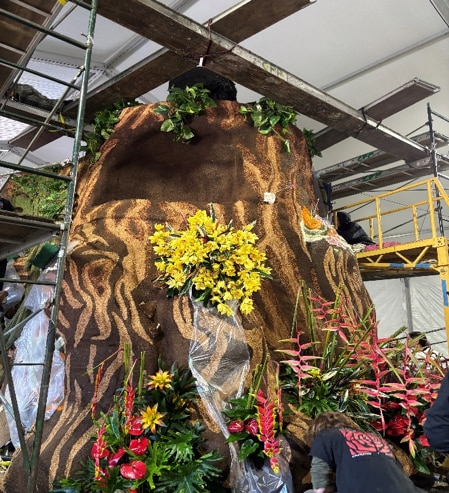
Braving wind and rain, visitors marvelled at "Jungle Jumpstart," a 53-foot-long, 25-foot-high, 18-foot-wide float made by Cal Poly Pomona and Cal Poly San Luis Obispo students. Using synchronised mechanical movement to depict rainforest animals working together to restore an old robot, the float was decorated with 21,000 roses, orchids, carnations and heliconia, alongside coffee beans, curly willow and walnut shells.
This Rose Parade entry, designed and built entirely by students, tells a story of nature and technology working in harmony — mirroring the way students collaborate across disciplines, campuses and hundreds of miles to create something extraordinary.
In a year themed "The Magic in Teamwork," the crowd favourite was named Sweepstakes Award winner and most beautiful float overall by the judges.
So why did Jungle Jumpstart win? Beyond the creativity, precision engineering and sheer passion of its student developers, the float skillfully unified a remarkable range of elements — from a 23-foot robot with a toucan in its mouth to a jaguar, two ring-tailed lemurs and a tree frog — into a cohesive whole that dazzled spectators.
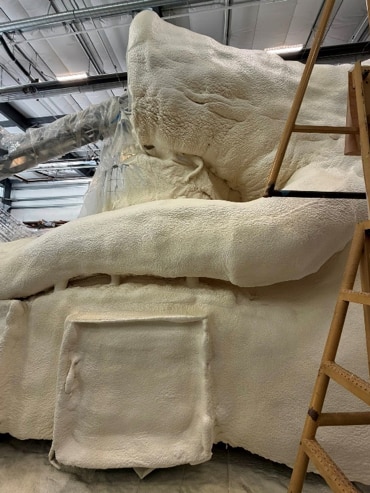
The students used closed cell medium density spray foam from General Coatings Manufacturing Corporation (GCMC) to model the different elements. Having supplied Cal Poly with spray foam for over 20 years, GCMC understands the realities and challenges of producing high-impact float designs — and given the scale of this year's ambitions, the team knew the stakes were higher than ever.
Applying closed cell spray foam requires specialist expertise and equipment that Cal Poly lacked. To get around this, GCMC asked for volunteer assistance from its national network of approved, certified applicators. Four professionals from different parts of the United States put their hands up to join the students on site. Working under the design direction of the students, the applicators took responsibility for all aspects of spraying and managing the equipment. Interested students were permitted to spray a small amount of foam under supervision, to enable them to better understand the process.
A key ingredient in the GCMC closed cell spray foam is Solstice® Liquid Blowing Agent (LBA) from Solstice Advanced Materials. Based on hydrofluoroolefin (HFO) technology, Solstice LBA has a global warming potential (GWP) of just 1 — 99.9% lower than traditional hydrofluorocarbon (HFC) blowing agents — making it an ideal fit for Cal Poly's eco-friendly 2026 float theme.
"Beyond its environmental credentials, Solstice LBA offers superior insulation values, high yield and easy application. Its non-flammability and low toxicity make it safe for the students to use and safe for the wider Rose Parade environment."
— Will Lorenz, President, General Coatings Manufacturing CorporationFor Cal Poly, the GCMC closed cell spray foam provides the strength required to support the size, scale and complexity of its float designs, and the ability to hold up to the elements. This year, for example, while other float structures sagged in the wind and the rain, Jungle Jumpstart retained its integrity throughout. In addition, the foam's smooth surface profile gave the students the ideal canvas for a stunning visual finish.
Reflecting on Cal Poly’s achievement, Solstice Advanced Materials Research Fellow Mary Bogdan remarked:
"This is the first time in nearly 80 years that a student-built float has won the Rose Parade. Traditionally, the award has gone to large commercial organisations."
— Mary Bogdan, Research Fellow, Solstice Advanced Materials"By collaborating closely with the GCMC and Cal Poly teams, we were able to understand the students' aspirations and help them turn their dreams into reality," added Bogdan. "As a company, we're always looking to engage with the next generation of designers and engineers — and this is a wonderful way to do it. Together with GCMC, we look forward to helping Cal Poly win more awards in the years to come."
To learn more about Solstice® Blowing Agents, including Solstice LBA and Solstice Gas Blowing Agents (GBA), and how they outperform alternative blowing agents in foam and environmental performance, visit us today.




CONTACT US
We’re here if you need us. Complete the form to connect with our team on any inquiry, including outreach to our sales or customer experience teams, tips on and troubleshooting with your portal or ecommerce profile, and to sign up for marketing communications.
Solstice Advanced Materials Inc.
115 Tabor Rd.
Morris Plains, NJ 07950